The Installation Process
Fencing a Challenging Landscape: Slopes, Rocky Soil, and Trees
A guide for Columbus homeowners on how slopes, rocky soil, and mature trees change fence installation, covering layout, drainage, drilling, and tree protection.
A guide for Columbus homeowners on how slopes, rocky soil, and mature trees change fence installation, covering layout, drainage, drilling, and tree protection.

If your yard has a slope, a few mature trees, or rocky ground, you may have wondered whether a fence is even realistic. The answer is yes. These fence installation challenges are common, and they simply call for different techniques than a flat, open lot would.
Standard methods assume level ground and soil that digs easily. When a yard doesn't match those assumptions, the details of the installation matter much more. A few careful adjustments are usually what keep the fence stable and straight over time.
This guide walks through how we handle slopes, rocky soil, and trees. It should give you a clear picture of what challenging landscape fencing involves and what to look for when you compare contractors.
A slope, rocky ground, or a mature tree changes how a fence gets installed, but none of them rules a fence out. Slopes call for the right layout, post spacing, and drainage, rocky soil calls for drilling instead of digging, and trees call for protecting the roots and leaving them room to grow. A little planning for each condition helps the fence stay stable and straight for years.
Standard installation methods are designed for a flat, open lot with soil that digs easily, and they work well when a yard fits that description. When you're fencing a challenging landscape, the method has to adjust to the site instead. A slope, a patch of rock, or a mature tree each changes how posts are set, how water drains, and how well the fence holds its line over time. Each of those conditions calls for its own approach, so we'll take them one at a time, starting with slopes.
Sloped fence installation starts with choosing a layout. A racked layout angles the rails to follow the ground and leaves no gaps at the bottom, which suits gentler grades. A stepped layout drops level sections down the hill, which handles steeper ground but leaves a triangular gap beneath each section. Our guide on how your property's features affect your fence plan compares the two in its section on slopes.
Once the layout is settled, the next decision is post spacing. On steeper stepped layouts, posts are often set closer together so the downhill posts don't have to be excessively long, and so each step leaves a smaller gap underneath. Gentler grades usually keep standard spacing.
Water is the other thing a slope changes. Runoff travels downhill along the fence line and can erode the soil around post bases, which weakens the foundation over time. Crowning the concrete slightly above grade and sloping it away from each post helps that water drain off instead of pooling, and a gravel base adds to the effect. Our post depth guide covers the backfill and drainage details.
Soil is the other condition that changes how a challenging site gets handled. Clay, sand, and rock each ask for something different, and rock changes the process the most.
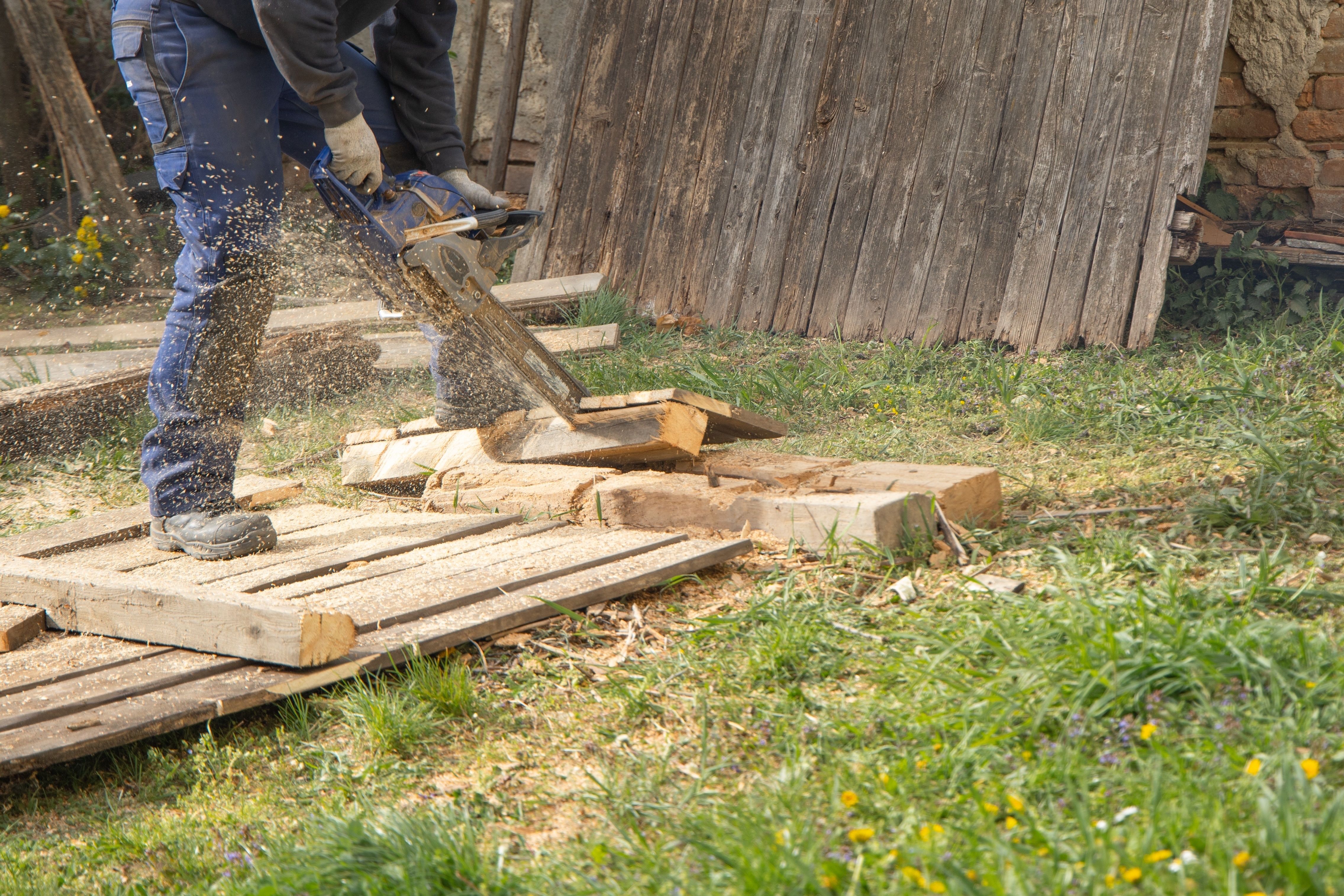
Fencing in rocky soil is the one situation where the usual digging process stops working. A standard post hole digger or auger can't get through rock, so the crew switches tools. A rock drill or hammer drill, powered by an air compressor or a generator, can cut a hole straight into rock. A jackhammer or hand bar can break out rock that's too large to dig around.
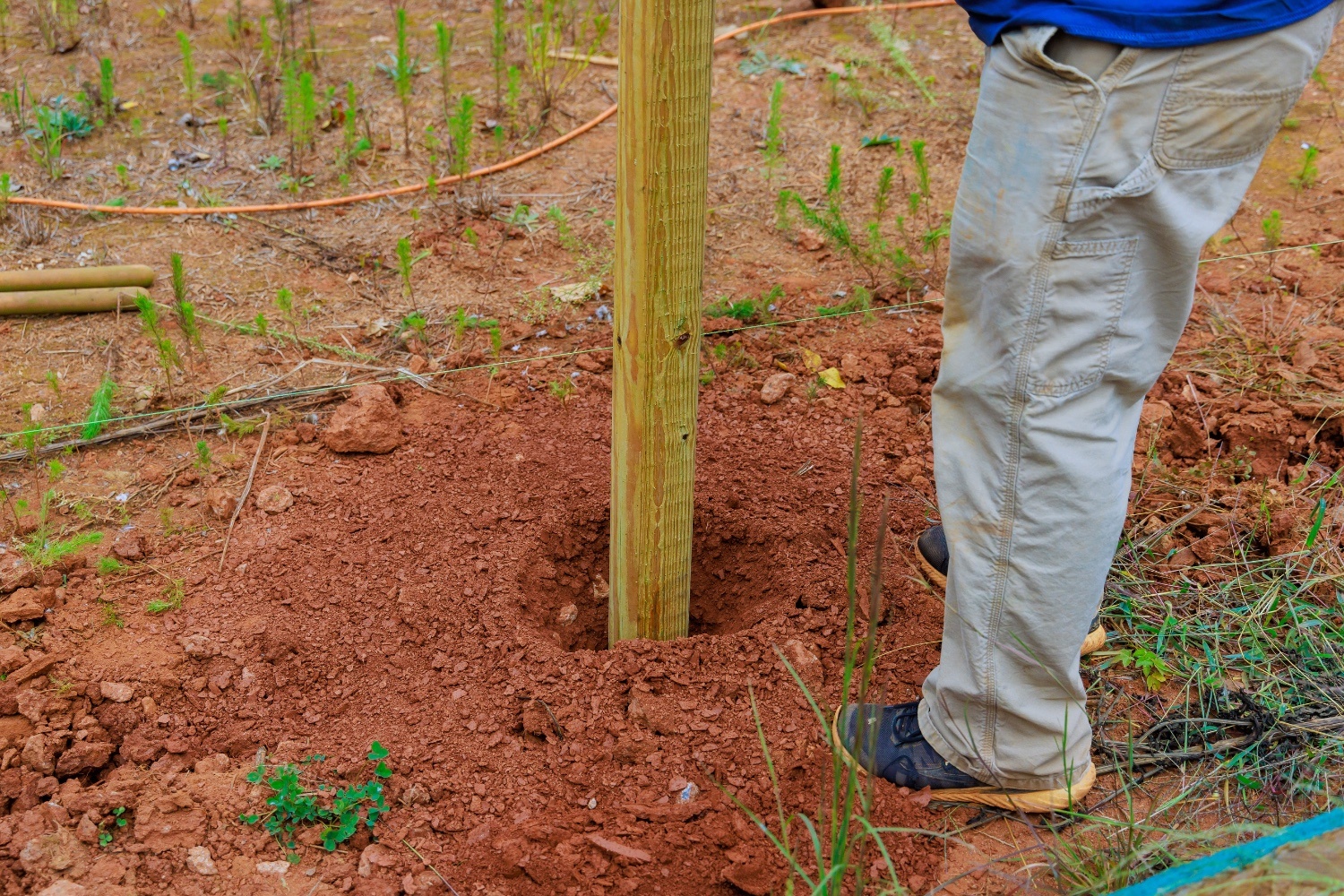
Depth works differently here as well. Rock limits how far a hole can go, so the goal shifts from digging to a set depth to anchoring the post firmly in the rock itself. The post is then set in concrete to lock it in place, and posts anchored this way tend to be very stable. A hydraulic post driver can help in loose, rocky ground, but it usually can't get through bedrock. All of this takes longer than digging, so rocky sites naturally take more time.
Clay and sandy soils are less dramatic, but they still shape the installation. Clay holds water, so gravel backfill drains better than native clay. Sandy soil gives posts less grip, so posts generally go deeper.
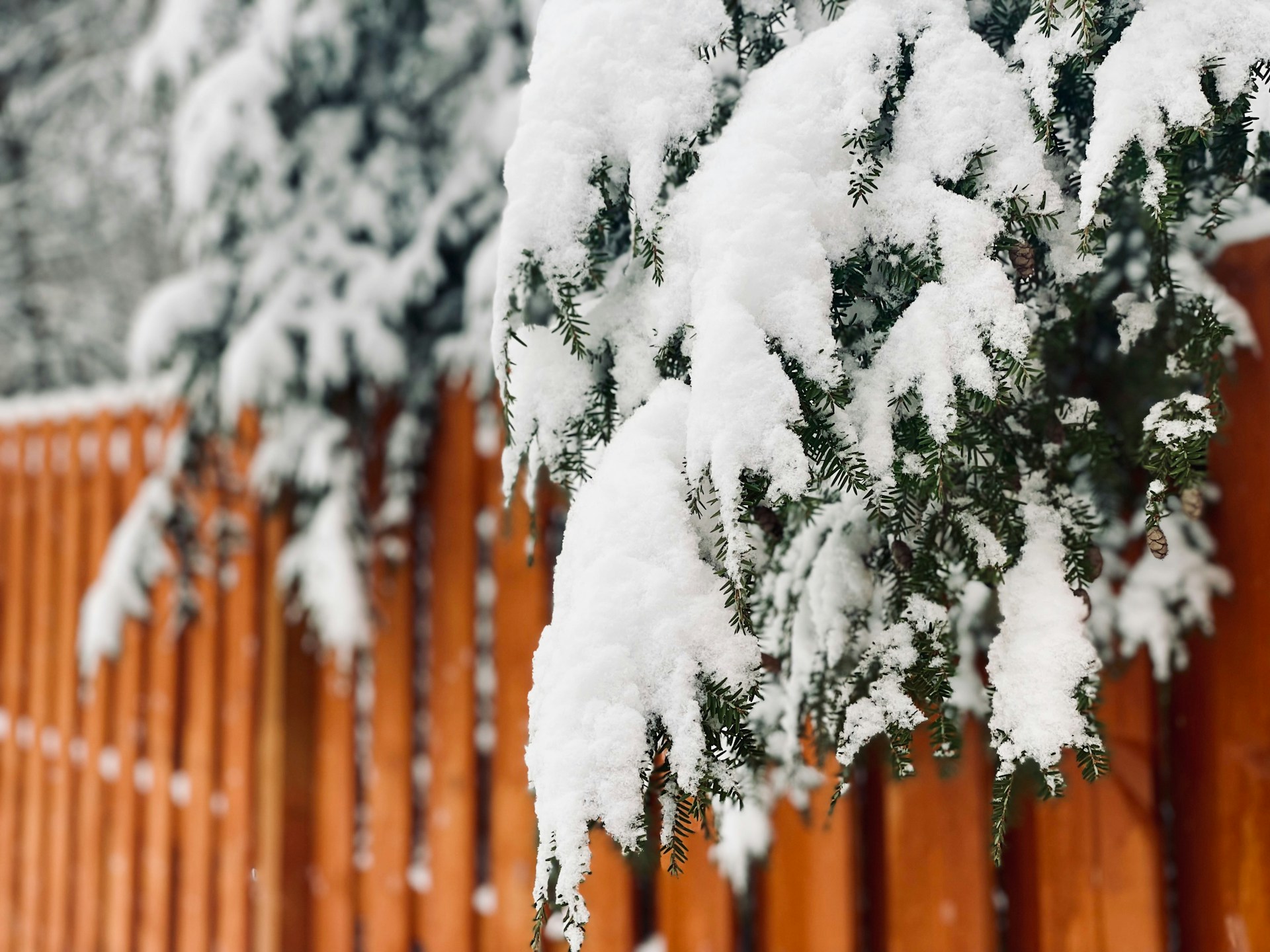
Trees are the last condition, and they call for a different kind of care. A tree is a living system with roots that reach well beyond what you can see, so the steps below protect the tree first and build the fence around it. Installing a fence around trees follows five steps.
Start by looking at the size of the tree and how far its canopy spreads. The root zone often extends past the edge of the canopy, so treat the canopy as the minimum area to protect. For large or protected trees, an arborist can help, since species differ in how their roots spread and local rules on distance vary by tree and by municipality.
Next, plan the fence line so posts land outside that area wherever the layout allows. Leave at least a few feet of open ground between the trunk and the fence. That protects the roots and gives the tree room to keep growing, so the fence isn't pressed against a trunk that gets bigger every year.
Sometimes the layout leaves no choice. In that case, the crew digs by hand instead of using an auger and shifts the post location slightly to avoid large roots. Cutting through major roots is avoided, since that can harm the tree.
Moisture collects around tree roots, which can make a wood fence decay faster near a large tree. Keep that in mind when choosing a material for that stretch of the fence. It also helps to keep the fence itself free of the trunk so nothing is attached to the tree.
Trees keep growing, so a periodic check keeps both the fence and the tree in good shape. Look for soil erosion along the fence line, signs of insect damage, and any spot where growth is starting to crowd the fence.
A sloped yard can be fenced with either a racked or a stepped layout. A racked layout angles the rails to follow the ground and leaves no gaps at the bottom, which suits gentler grades. A stepped layout drops level sections down the hill, which handles steeper ground but leaves a triangular gap beneath each section. On steeper stepped layouts, posts are often set closer together, and crowning the concrete away from each post helps water drain off.
Yes. A standard auger can't get through rock, so the crew uses a rock drill or hammer drill to cut into it, or breaks the rock out with a jackhammer or hand bar. The post is then anchored in the rock and set in concrete. Rock limits how deep a hole can go, but posts anchored in it tend to be very stable. Rocky sites take longer than regular digging.
No single distance applies everywhere. The root zone often extends past the edge of the canopy, so posts are best kept outside that area where the layout allows, with at least a few feet of open ground between the trunk and the fence. The size and species of the tree can change that, and local tree rules vary, so check with your local municipality for large or protected trees.
It doesn't have to. Damage mostly comes from cutting or crushing roots. Keeping post holes out of the root zone, digging by hand when a post has to go closer, and avoiding large roots all protect the tree. The fence also shouldn't be attached to the tree itself, since the tree keeps growing.
Often, yes. Drilling through rock, digging by hand near tree roots, and laying out a fence on a slope all take more time than a straightforward installation. How much longer depends on the site, so a walkthrough of the property gives a much clearer picture than a general estimate.
If your yard has a slope, rocky ground, or mature trees, we'd be glad to walk the property with you first. These conditions are easier to judge in person, and seeing them together helps us figure out the layout, the digging, and the post locations together.
We also plan around Columbus-area soil and weather, so your fence stays stable well beyond installation day. If you have a large tree, it's a good idea to check your local tree rules early, since they can affect where posts are allowed to go.
When you're comparing contractors, feel free to ask how each one would handle your slope, your soil, or your trees. We're always happy to share how we'd approach yours.
If your yard has a slope, rocky ground, or a few mature trees, a fence can feel like it's going to be a complicated project. That's a fair concern, because these sites do take more planning and more care than a flat lot. They're also very workable, and a thoughtful plan for the slope, the soil, and the trees usually leads to a fence that looks great and holds up well.
We understand that a challenging yard can feel intimidating, and these jobs are a big part of why we do this work. We're happy to walk the property with you, talk through what each condition means for your fence, and share what we'd recommend.
Got a Slope, Rocky Ground, or Mature Trees?
We offer free consultations for Columbus homeowners, and we'll walk your property and talk through what your fence needs.
Get a Free Quote