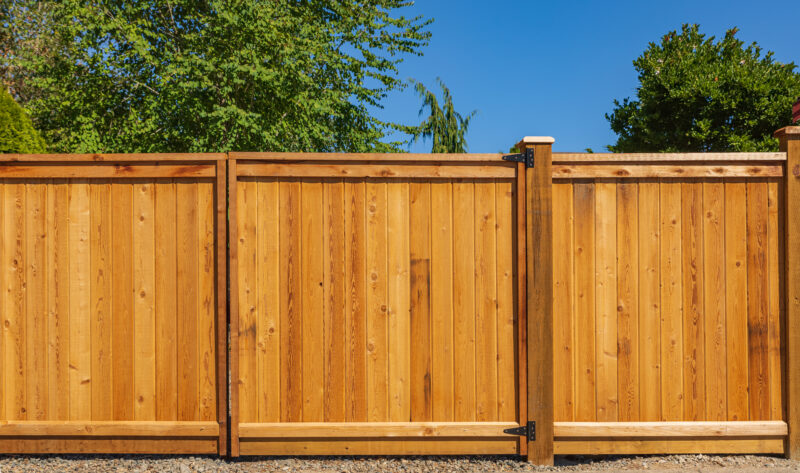
Choosing Your Materials
What Actually Affects Your Fence Cost in Columbus (Beyond Just the Material)
Why do two quotes for the same fence vary by thousands? Slope, soil, gate count, and board spacing all shift the number more than material choice.
Why do two quotes for the same fence vary by thousands? Slope, soil, gate count, and board spacing all shift the number more than material choice.

Your local lumber yard can tell you exactly how much cedar costs per board foot, but that number alone won't explain why your neighbor's fence cost significantly less than the quotes you're seeing. Same cedar fence, same height, roughly the same distance.
So where does the difference come from? Mostly, it's everything beyond the wood itself.
Fence cost depends on dozens of factors that tend to surface once you start getting real quotes. Your property's slope, Columbus's challenging clay soil, the spacing between your fence boards, and whether you need one gate or three can all influence the final number more than the choice between cedar and pine.
Two identical materials can lead to very different totals once installation complexity enters the picture. This guide walks through every factor that legitimately drives price differences, so you can understand exactly what you're paying for when contractors hand you those estimates.
In Columbus, fence cost can depend as much on your property as your material choice. Linear footage, height, and material set the baseline, but slope, soil, gate count, and equipment access routinely shift quotes by 20–50%. Most Central Ohio installers recommend getting at least three on-site estimates before comparing prices, and FYI those online calculator estimates are not to be trusted. Nothing can substitute for seeing the project site in-person and assessing the true build cost with all the variables taken into account.
Every fence estimate starts with three basics: what you want it made from, how much you need, and how tall you want it. These create your baseline before property-specific challenges kick in.
Linear footage is simply the total distance your fence will cover. Sounds straightforward, but the math gets tricky once you start accounting for corners. Each one needs an extra post, and every direction change adds materials and labor to the project.
A simple rectangular backyard is much easier to estimate than an L-shaped lot with angles going every which way. If you want a reliable number to work with, a measuring wheel or your property's plat map will get you closer than most online calculators, which tend to assume perfectly straight runs on perfectly level ground.
Material choice affects both your upfront investment and what you'll spend down the road. Different materials fall into different price tiers, and knowing where each one lands can help you weigh your options:
Within each tier, quality grades also create noticeable price differences. Take wood fence projects, for example. The gap between #2 grade cedar (visible knots, color variation) and premium #1 grade (minimal defects, consistent appearance) can significantly impact both cost and how long the fence holds up.
Taller fences cost more for a few reasons: longer posts, more pickets per linear foot, and additional horizontal rails to keep everything sturdy.
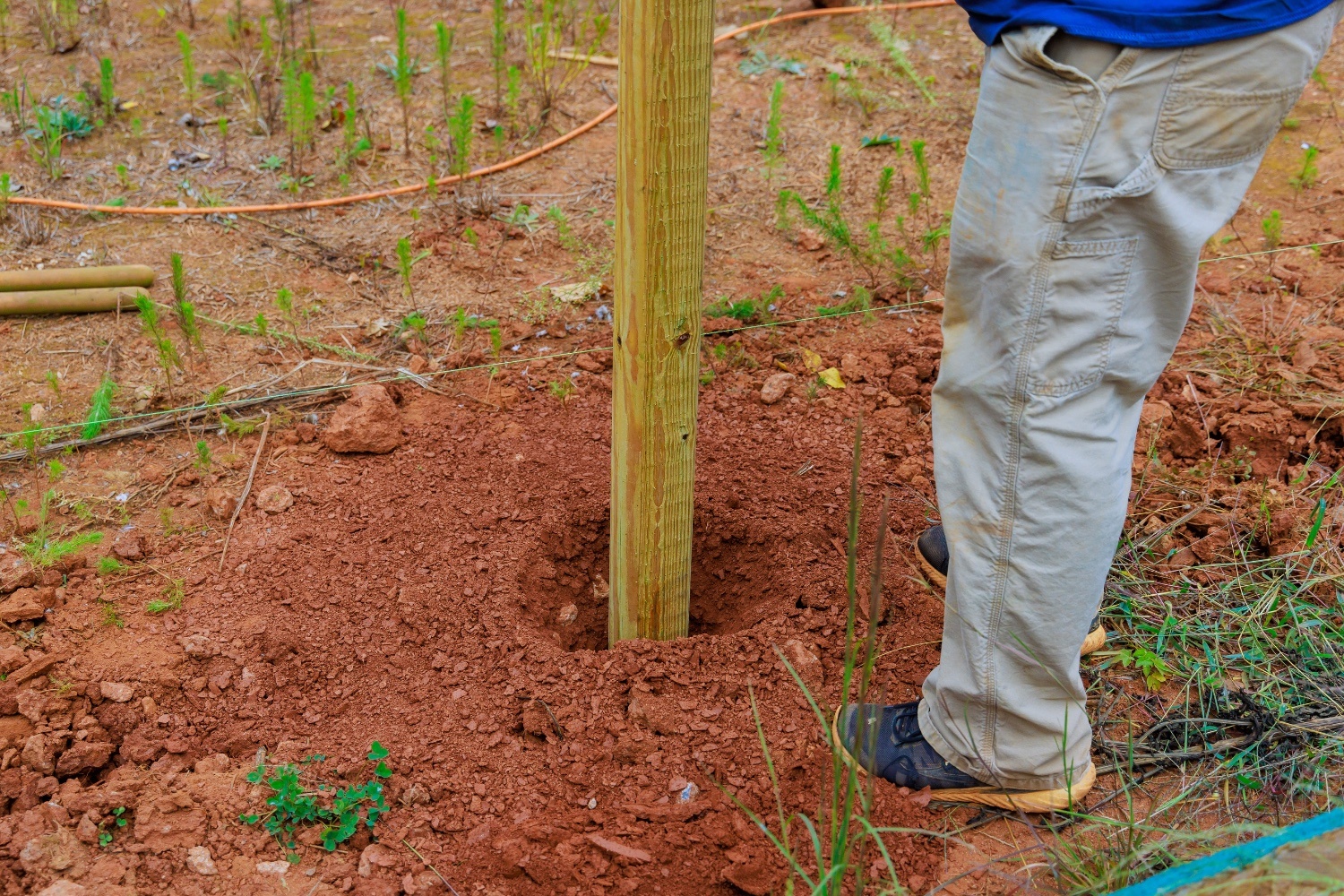
A 6-foot privacy fence typically needs three rails, while an 8-foot version requires four. Posts also need to extend into the ground about one-third of their total length, so taller fences mean deeper holes. In Columbus, posts should reach at least the 32-inch frost line to prevent heaving during winter.
It's easy to think of fence design as purely a style decision, but the choices you make here have a real impact on materials and cost. A few tweaks to board arrangement or spacing can shift your estimate more than you might expect.
Privacy fence construction varies quite a bit based on how the boards are arranged:
Semi-privacy designs with intentional spacing between boards use less material while still providing some visual screening. Most online calculators assume basic stockade construction, so upgraded styles will push estimates higher.
How tightly you space your boards has a bigger impact than most people expect. Tight privacy with no gaps between boards requires significantly more pickets than standard spacing with small gaps for airflow. The difference can be substantial, sometimes reducing material needs by a third or more just by allowing a little breathing room.
Many homeowners are surprised when spacing preferences change their wood fence cost by this much, but it makes sense once you realize this choice directly determines how much lumber goes into the project.
Gates are one of those details that can quietly add up. Each one needs hinges, latches, handles, and security hardware, plus heavier posts to handle the stress of repeated opening and closing.
Most properties need at least one gate, and many end up needing two or three once you factor in side yard access and future maintenance. Double drive gates and automatic systems add even more to the total. Corner posts and end posts also typically require that heavier construction, which means wider holes, more concrete, and additional labor.
If you've ever tried digging in Central Ohio, you know about the clay. When it's dry, it's like concrete. When it's wet, it's an unworkable sticky mess. Either way, it can slow down installation and sometimes requires specialized equipment. Clay also shifts with moisture, so posts need proper drainage and should reach at least the 32-inch frost line to stay put through freeze-thaw cycles.
Terrain varies across Columbus, and that affects both method and cost:
Stepped installation keeps panels level with varying post heights, creating a stair-step look. Racked installation angles the rails to follow the ground for a smoother appearance, but requires custom fabrication.
Equipment access matters too. Open backyards cost less than properties where materials have to be carried through narrow side yards.
Materials typically represent only 40–50% of total fence cost. The rest covers labor, equipment, and all the details that make a project come together properly.
Professional installation adds value through experience with local soil conditions, efficient crews, proper equipment, and quality workmanship. Things like accurate post alignment, precise gate fitting, and adequate concrete curing take time to do right.
Permit requirements vary across Columbus suburbs, so it's worth checking with your local municipality before starting. Most residential fences under 6 feet don't require permits, but corner lots often face sight-line restrictions, and front yard fences typically have lower height limits.
If there's any uncertainty about your property lines, a professional survey can save headaches down the road. Building even a few inches onto a neighbor's property can create legal complications that are much more expensive to fix later.
Quality fence contractors typically include Ohio 811 utility marking, site prep, cleanup, and warranties in their quotes. Services like old fence removal, grading work, and permit fees are often listed separately.
Online fence calculators are helpful for getting a ballpark figure, but they can't account for your specific property. Things like terrain, clay soil, access limitations, and gate placement all affect the final number in ways a calculator can't predict. Getting quotes from a few fence companies near you is the best way to see what your project will actually cost.
Material choice, linear footage, and height create your baseline, but property-specific factors often have a bigger impact than people expect. Terrain, clay soil, gate count, and equipment access can all shift the final number significantly. That's why online calculators tend to underestimate what Columbus projects actually cost.
Chain link is typically the most affordable option, followed by split rail and pressure-treated pine. Wood fence cost varies quite a bit depending on the species and grade you choose, but it generally falls in the mid-range.
It depends on the severity and installation method. Gentle slopes might add 10–25%, while steeper terrain can push costs higher. Stepped installation (where panels stay level and post heights vary) usually costs less than racked installation (where rails angle to follow the ground).
Permit requirements vary across Columbus suburbs, so it's always worth checking with your local municipality. Most residential fences under 6 feet don't require permits, but corner lots often face sight-line restrictions, and front yard fences typically have lower height limits.
Clay can be tough to dig through when it's dry and unworkable when it's wet, which sometimes requires specialized equipment. It also shifts with moisture changes, so posts need proper drainage and should reach the 32-inch frost line to stay stable through freeze-thaw cycles.
Fence cost is rarely as straightforward as material price times linear footage. Your property's terrain, soil, layout, and design preferences all play a role in the final number. The good news is that once you understand what drives those costs, you're in a much better position to plan your budget and evaluate quotes with confidence.
Every property is a little different, and that's exactly why generic estimates only get you so far. Whether you're weighing material options, trying to make sense of a quote, or just starting to explore what a new fence might involve, knowing what questions to ask makes the whole process smoother.



.jpg)
.jpeg)
.jpg)










.jpeg)